
Custom Sheet Metal Panels for Industrial Equipment
Source equipment panels built around your drawings, mounting interfaces and surface requirements. ShincoMetal is a China-based sheet metal manufacturer supplying custom panels for industrial and electronic equipment.
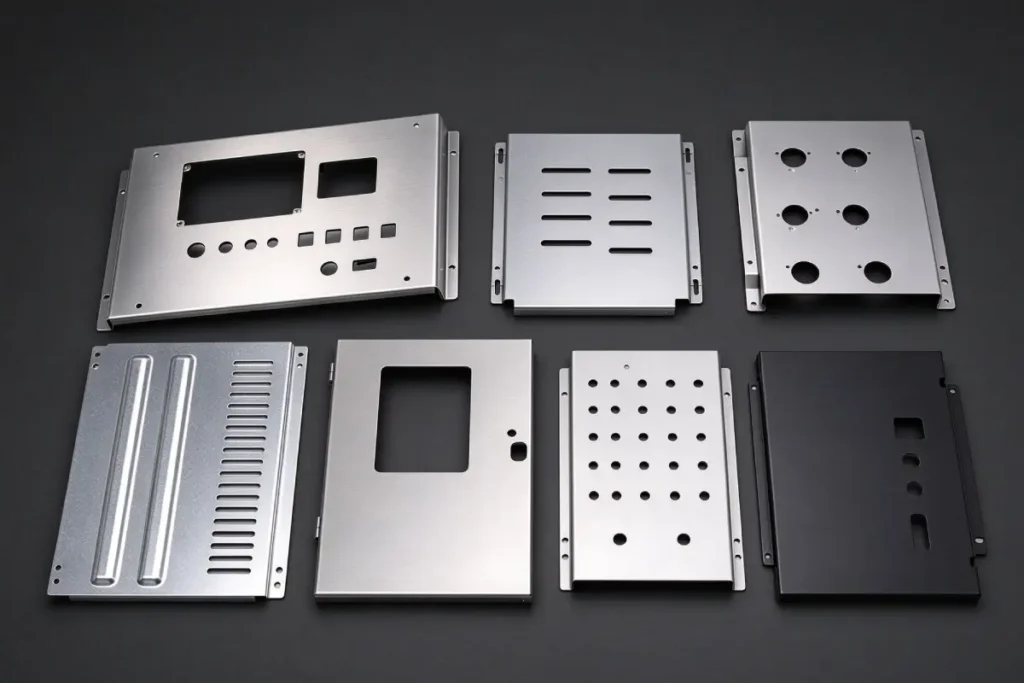
From flat instrument faceplates to flanged covers and mounting backplates, define the complete part in one inquiry: material, cutouts, bends, hardware, finish and inspection requirements.
- Front panels, equipment covers, ventilation panels and mounting backplates
- Connector openings, mounting patterns, formed edges and threaded attachment points
- Project-specific review of geometry, finish, quantity and assembly requirements
Check Your Panel Requirements Against Our Fabrication Scope
A panel needs to fit its mating assembly after cutting, forming, hardware installation and finishing. Start with the finished-part requirements so the manufacturing route can be assessed as a whole.
| Requirement | Features to define | What affects the manufacturing route |
|---|---|---|
| Cut profiles and openings | External shape, connector cutouts, display windows and mounting holes | Material, thickness, feature size and edge requirements |
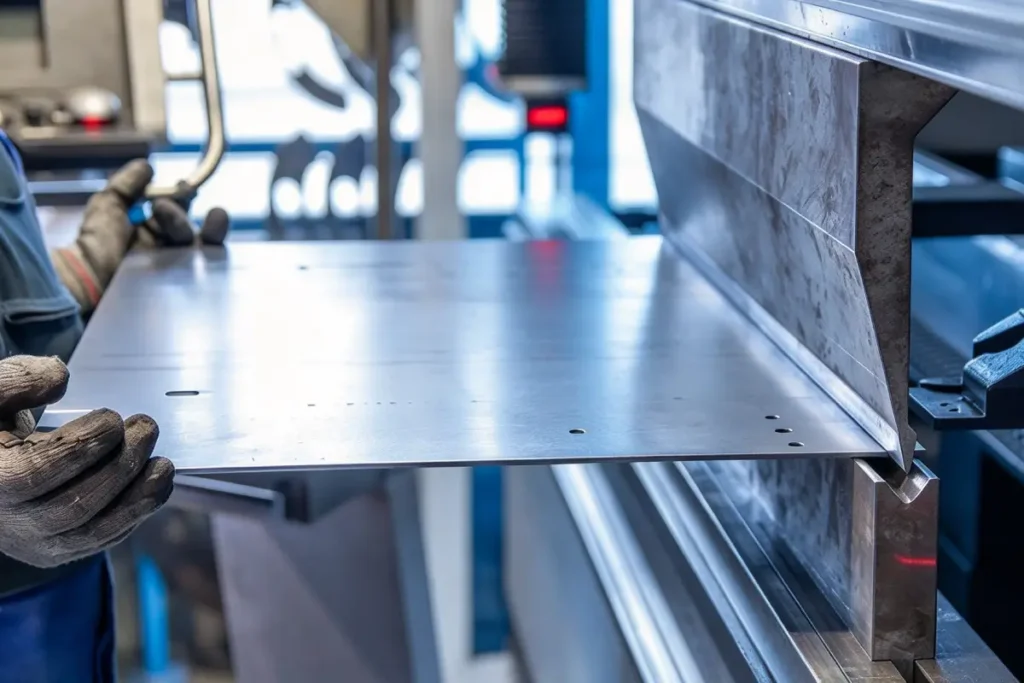
| Formed geometry | Return flanges, offsets, folded edges and cover depth | Bend radius, flange length, bending sequence and tool access |
| Perforations and formed features | Ventilation patterns, louvers and knockouts | Pattern geometry, tooling requirements and order quantity |
| Installed hardware | Nuts, studs, standoffs and other specified fasteners | Sheet thickness, hardness, edge distance and installation access |
| Joined features | Corners, brackets and stiffeners | Joint access, distortion, appearance and finishing sequence |
| Finished surfaces | Coatings, masked areas and identification | Exposure conditions, cosmetic requirements and final assembly clearance |
Preliminary Capability Guide
The following proposed ranges are intended to help buyers screen a project before submitting a full RFQ. They require factory confirmation and do not establish that every combination of material, size and geometry is manufacturable.
| Material | Proposed thickness range | Conditions |
|---|---|---|
| Aluminum 5052-H32 | 1.0–3.0 mm [To be confirmed] | For flat and formed panels; bend geometry and grain direction require review |
| Aluminum 6061-T6 | 1.0–3.0 mm for flat panels [To be confirmed] | Formed designs require separate assessment of radius, orientation and cracking risk |
| Stainless steel 304 / 316 | 0.8–2.0 mm [To be confirmed] | Grade, surface condition and formed geometry affect process selection |
| Cold rolled steel | 0.8–3.0 mm [To be confirmed] | Finish and corrosion requirements should be specified |
| Galvannealed steel | 0.8–2.0 mm [To be confirmed] | Coating specification, exposed edges and any welding require review |
For an initial flat-panel inquiry, a proposed screening size is up to 1,000 × 2,000 mm, subject to material, thickness, handling and flatness requirements.
Formed covers require a separate review of blank size, finished depth, flange geometry and tool clearance. A flat-panel size range does not establish the same envelope for a bent part.
Laser cutting and press-brake forming are carried out in-house. Self-clinching hardware requirements are reviewed against the selected fastener, sheet material, thickness and installation access.
Powder coating and silk screening are carried out at our own plant. Anodizing, zinc plating, electrophoresis and passivation are coordinated with specialist finishing partners. Include the required finish specification, masking areas and documentation in your RFQ so the processing route can be reviewed for your panel.
Panel Types for Equipment Assemblies
Rackmount Front Panels
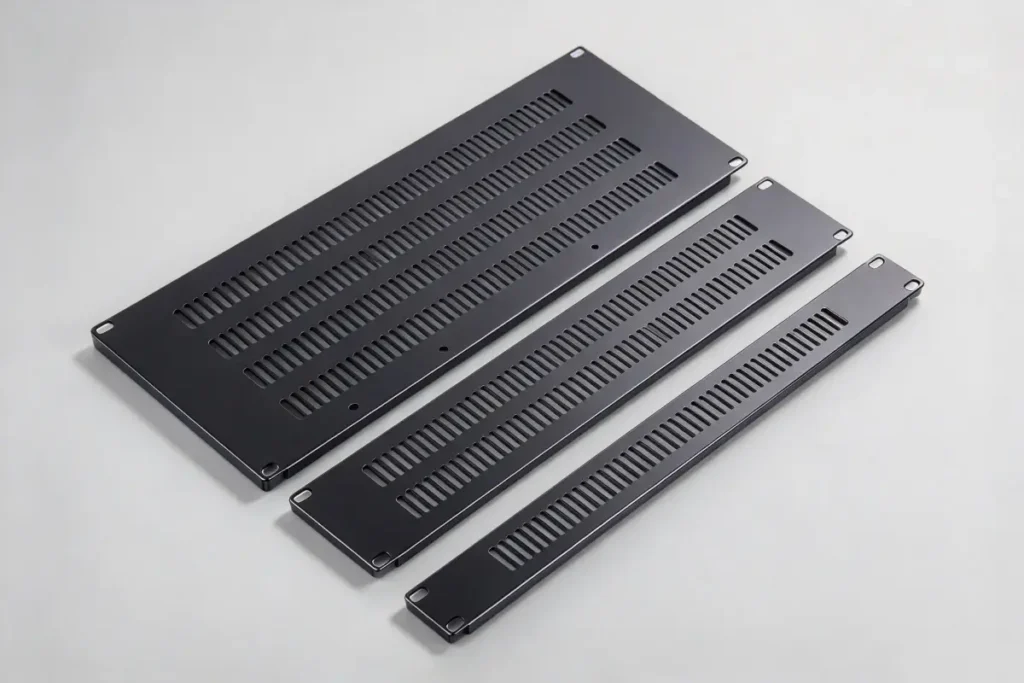
Rackmount panels position connectors, controls and handles at the equipment interface. Define the mounting standard where applicable, usable panel area, component openings and rear clearance.
A specified rack interface defines requirements for the panel; it does not establish compliance for the complete equipment.
Enclosure Covers and Access Panels
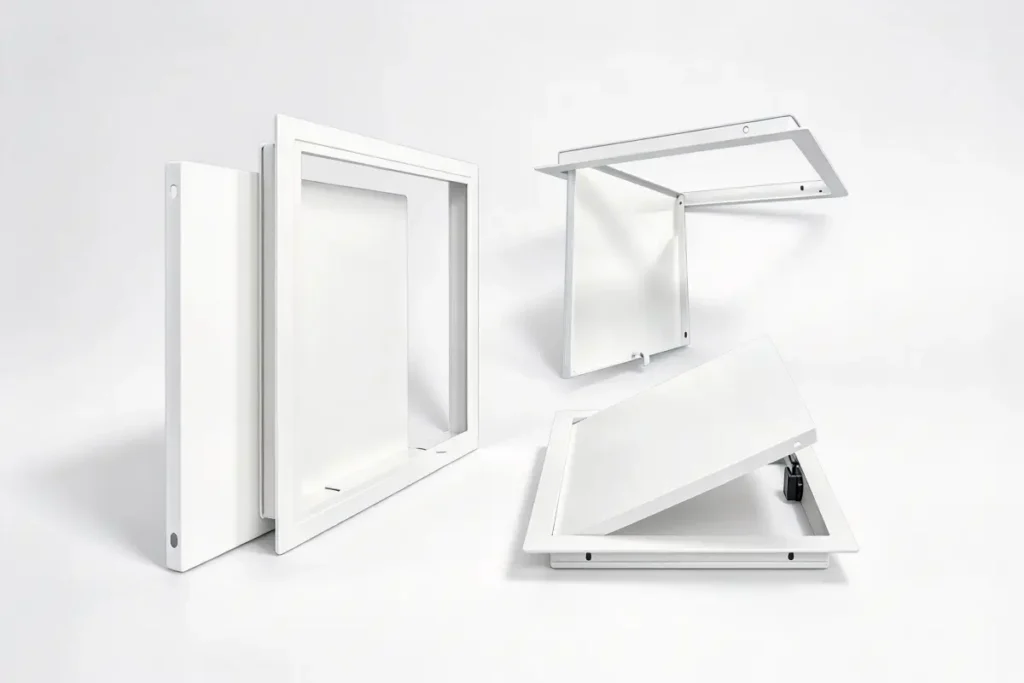
Flanged covers and removable panels need installation clearance, accessible fasteners and a defined mating surface. Where a gasket is used, identify its contact area and compression requirements.
Ingress performance depends on the complete enclosure, including seals, joints, fasteners and installed components.

HMI and Instrument Faceplates
Display windows, switches and connector openings must align with the components behind the panel. Identify the visible face, surface direction and artwork orientation so that the finished panel matches the installed equipment.
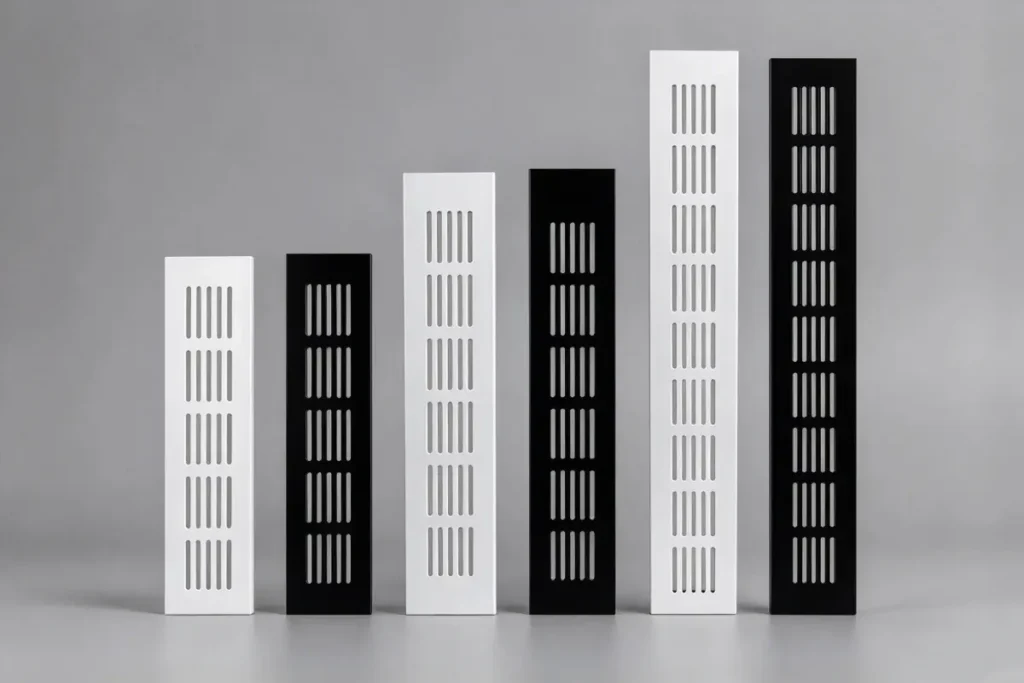
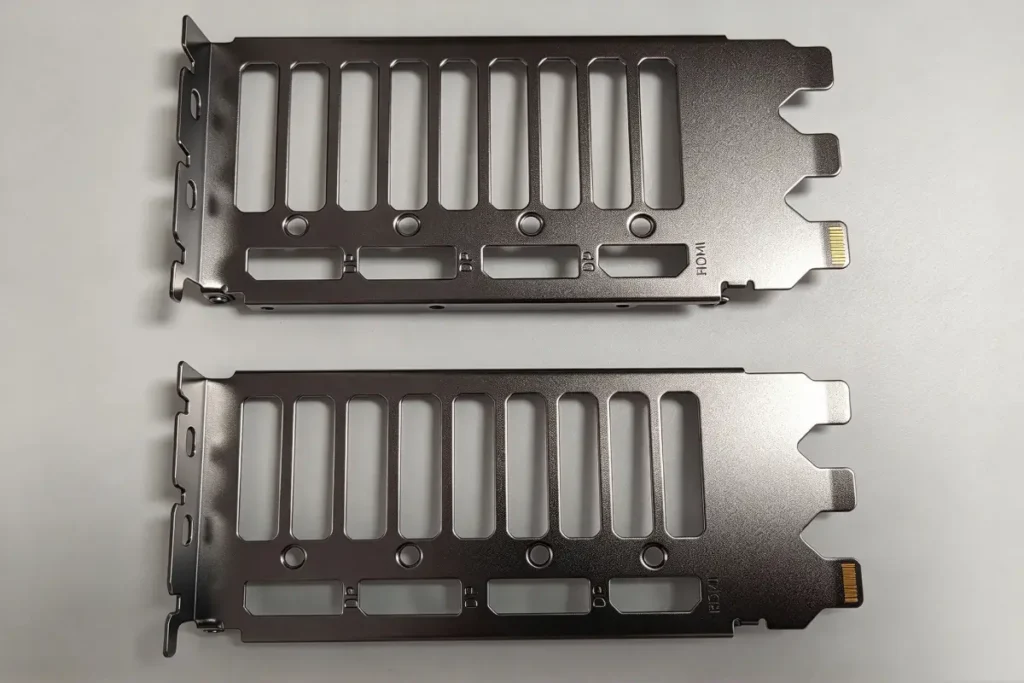
Ventilation Panels
Slots, perforations and louvers must balance airflow, stiffness and access protection. Specify the pattern and any mounting or sealing areas that must remain intact.
Open area alone does not establish cooling performance. EMI shielding also depends on conductive continuity and the panel’s connection to the surrounding enclosure.
Mounting Backplates and Sub-Panels
Backplates locate rails, power supplies, cable supports and other components. Hole patterns, standoff heights, local loads and available assembly space should be considered together.
Where deflection matters, define the load and support conditions rather than relying on sheet thickness alone.
Materials, Finishes and Panel Identification
Select material and finish together. The substrate affects forming and weight, while the surface system influences corrosion behavior, appearance, electrical contact and final fit.
| Material | Typical selection reason | Design consideration |
|---|---|---|
| Aluminum 5052 | Lightweight formed covers and equipment panels | Temper, radius and grain direction affect bending |
| Aluminum 6061 | Flat panels requiring its mechanical properties | T6 material generally requires more care when formed than 5052-H32 |
| Stainless steel 304 | Exposed surfaces and general corrosion resistance | Springback, surface direction and cosmetic handling matter |
| Stainless steel 316 | Applications benefiting from added chloride resistance | Suitability depends on actual exposure and cleaning conditions |
| Cold rolled steel | Painted panels and mounting backplates | Corrosion protection should match the intended environment |
| Galvannealed steel | Painted panels using a zinc-alloy-coated substrate | Exposed edges, welding and coating compatibility need attention |
Define the Finished Surface
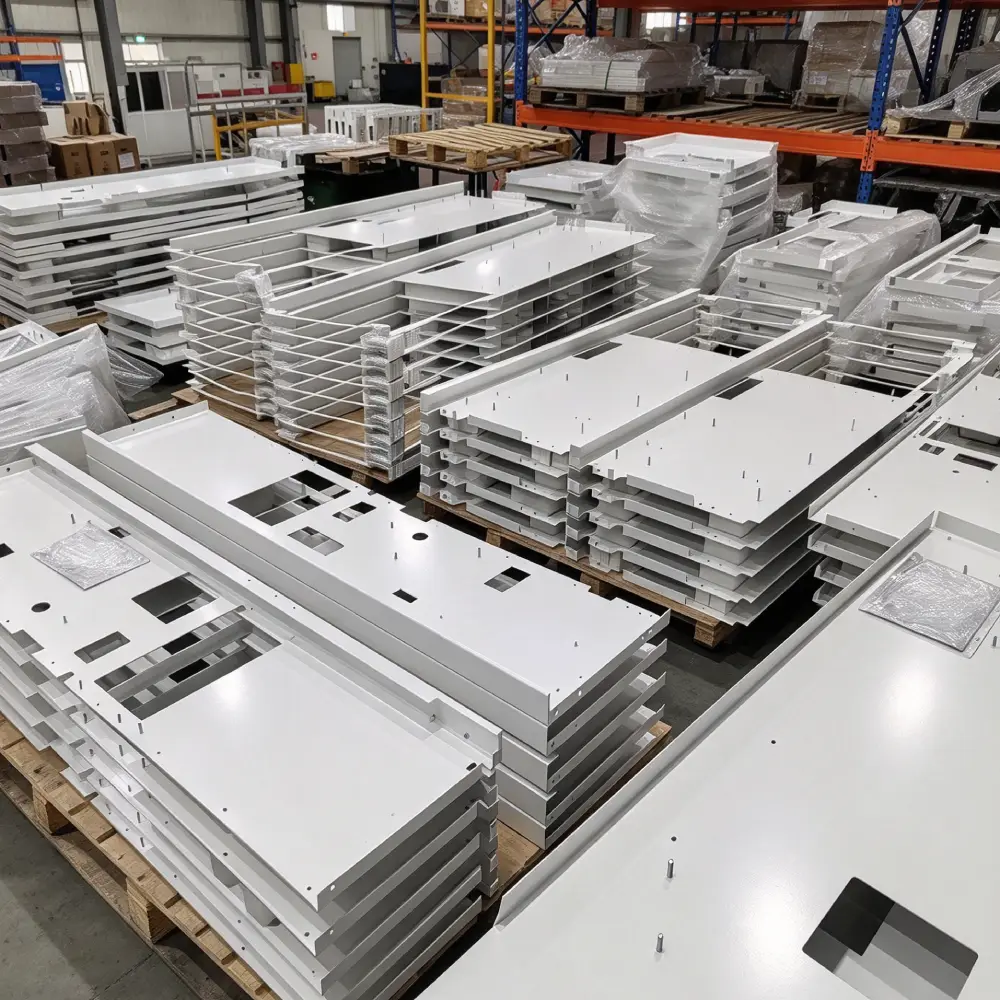
For powder coating or paint, specify color, gloss, texture and visible-face acceptance criteria. Coating build can reduce clearance in holes and slots; threaded features, grounding points and mating surfaces may require masking.
For anodizing, conversion coating or plating, identify the required specification and documentation. These processes serve different appearance, protection and conductivity needs.
Screen printing, laser marking and engraving should be selected around the substrate, finish and expected exposure. Supply controlled artwork with its revision, position and orientation.
RoHS, REACH and corrosion-test requirements should identify the applicable scope and acceptance criteria. A salt-spray result alone does not predict service life.
Resolve Hardware and Forming Details Before Production
Mounting Hardware
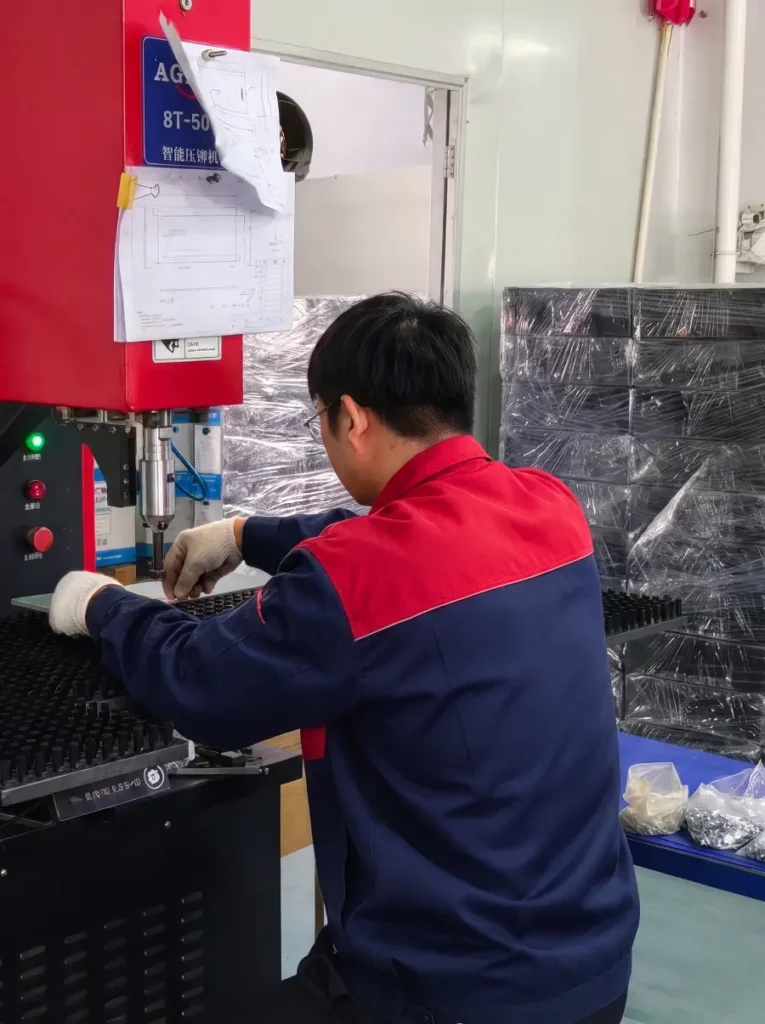
Self-clinching nuts, studs and standoffs need suitable sheet thickness and hardness. Hole size and centerline-to-edge distance should follow the selected hardware manufacturer’s data.
Specify hardware part numbers, installation direction and any functional acceptance requirements. Nearby bends and deep returns must leave access for installation tooling.
Countersinks and Threads
A countersink must suit the screw head and available material thickness. Thin sheet may not provide sufficient countersink depth or thread engagement. A formed feature or separate threaded fastener may be more suitable.
Bends and Cutouts
Holes near bends can distort during forming. Their placement should account for material, thickness, inside radius, tooling and feature shape.
Bend reliefs need sufficient clearance at flange intersections without creating unwanted interference, visible gaps or sealing problems.
Welded Corners and Stiffeners
Welding can close seams or attach reinforcing features, but heat may affect flatness and visible surfaces. Define joint locations, cosmetic requirements and any post-weld treatment before selecting the joining route.
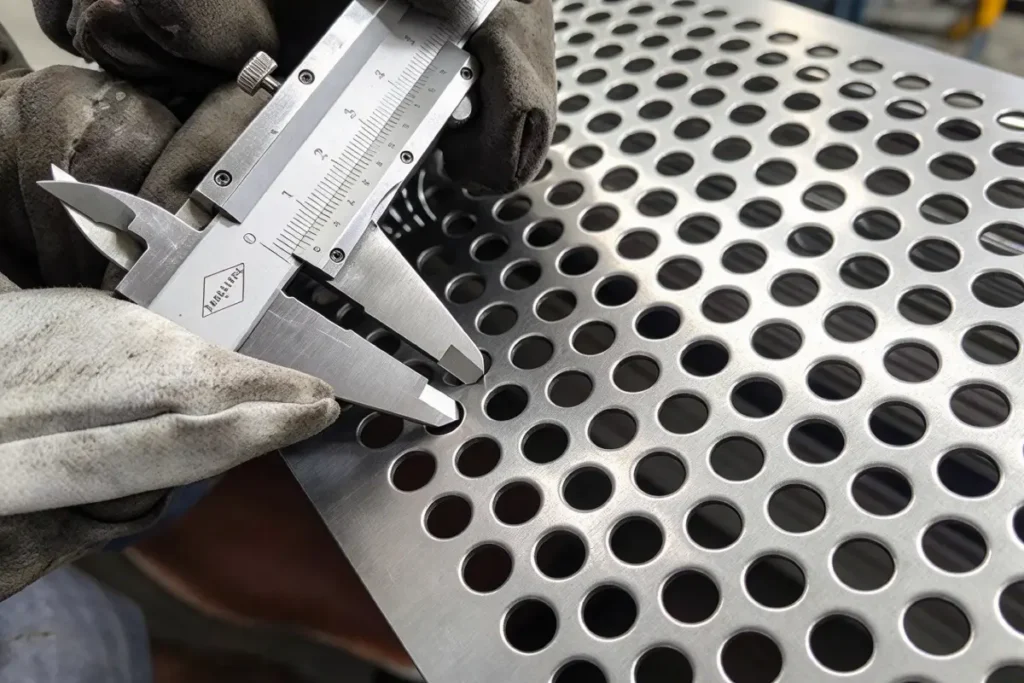
Quality Checks Focused on Assembly Fit
The inspection plan should follow the panel’s function. A connector pattern, gasket surface and visible front face need different acceptance criteria.
The following proposed inspection methods require confirmation against ShincoMetal’s actual equipment, procedures and reporting capability.
| Feature | Define on the drawing or specification | Proposed inspection approach |
|---|---|---|
| Mounting holes and cutouts | Datums, feature sizes and positional requirements | Dimensional checks using suitable calibrated tools; datum-based coordinate measurement where required and available [To be confirmed] |
| Formed flanges | Finished dimensions, angles and mating clearances | Finished-part dimensional and angle checks using suitable gauges or measuring tools [To be confirmed] |
| Flatness-critical areas | Controlled area, support condition and allowable deviation | Surface-plate and indicator checks under the agreed support or restraint condition [To be confirmed] |
| Installed hardware | Part number, location, orientation and acceptance criteria | Identification and installation checks; functional testing where specified and agreed [To be confirmed] |
| Coated and visible surfaces | Cosmetic zones, color, texture, masking and coating requirements | Visual checks against agreed acceptance criteria and coating-thickness checks where specified [To be confirmed] |
First-article dimensional reports can be supplied for agreed characteristics before repeat production.
Material certificates and finish documentation can be supplied where agreed at quotation, subject to the applicable material and process supply chain.
A certificate of conformity, material certificate and dimensional report answer different questions. Specify the documentation required for your part rather than treating one document as proof of every requirement.

From Prototype to Repeat Orders
A prototype helps check mounting fit, component clearance, hardware access and visible surfaces before the design is repeated.
For a pilot batch, confirm drawing revisions, assembly feedback and cosmetic acceptance criteria. Resolve changes before using the design as the basis for repeat orders.
For production inquiries, provide the order quantity and estimated repeat demand. Material utilization, hardware availability, finishing batches and inspection scope can all affect cost and scheduling.
If the design changes after a prototype, identify the new revision clearly so that quotations and production requirements remain aligned.
Protect the Finished Part in Transit
Packing requirements should reflect panel size, stiffness and surface finish. Visible faces may need separation to prevent rubbing, while edges and large flat areas may require additional support.
Include any individual packing, labeling or destination-specific requirements in the RFQ.
Frequently Asked Questions
What files should I send for a panel quotation?
Send a CAD model or flat profile together with a dimensioned drawing. Include the revision, material, thickness, finish, quantity and critical assembly requirements. If a requirement is still open, identify it so it can be discussed during review.
Can a flat aluminum panel and a bent cover use the same alloy?
Sometimes. A material suited to a flat panel may require a larger bend radius or a different forming approach when used for a cover. Select alloy and temper around the final geometry, mechanical needs and surface requirements.
What affects panel pricing?
Material, thickness, blank size, cutout complexity, bends, hardware, joining, finish and quantity affect the manufacturing scope. Special inspection, documentation and packing requirements can also affect the quotation.
Can I request prototype and production pricing together?
Yes. State both quantities against the same drawing revision. If prototype findings lead to a design change, the production quotation should be reviewed against the updated requirements.
What tolerances can my panel achieve?
Tolerances depend on material, geometry, cutting and forming operations, finish and measurement conditions. Identify the functional interfaces and drawing datums so the requirements can be assessed for the finished part.
Can panels support EMI shielding or an ingress-rated enclosure?
Yes, panels can form part of those systems. Shielding depends on conductive continuity and enclosure interfaces. Ingress performance depends on the complete sealed assembly. Specify the system requirements and how compliance will be verified.
How is the delivery schedule determined?
Material sourcing, drawing clarification, hardware, finishing, inspection and quantity affect manufacturing time. Include the required arrival date, destination and transport requirements so the schedule can be discussed for the complete scope.
Request a Quote for Custom Equipment Panels
Send your CAD model, dimensioned drawings, and assembly requirements for a project-specific fabrication review. Please include your required material, finish, hardware, and order quantity.
Factory Address
Building 1, No.8, Second Street, Huangjiang Town,
Dongguan City, Guangdong Province
Email
contact@shincometal.com
Phone / WhatsApp
+86 13392819510
Factory Visits
Please contact us in advance to arrange a factory visit.