
Metal Laser Cutting Services for Custom Parts
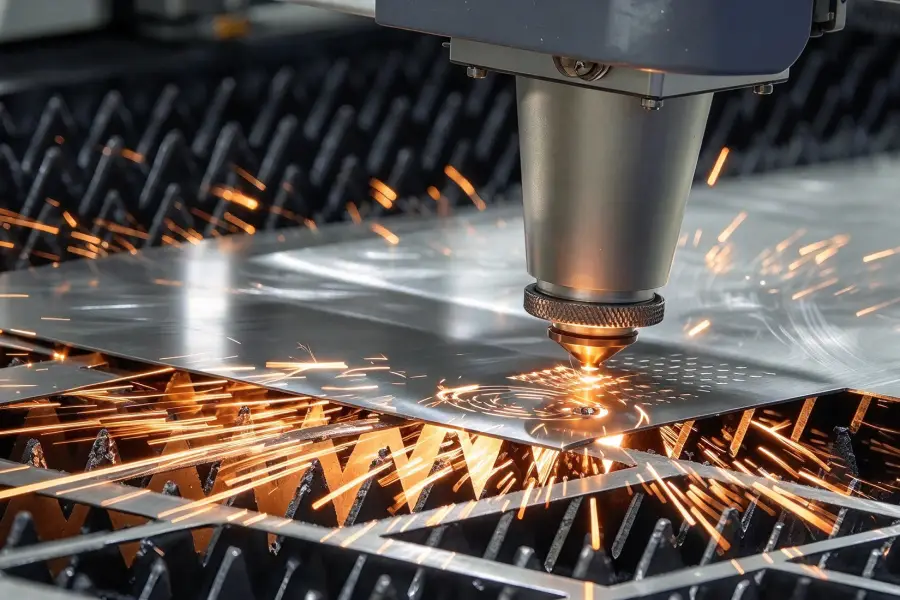
ShincoMetal manufactures custom sheet metal parts in China to customer drawings. Our laser cutting service covers flat blanks, mounting plates, vented panels, and blanks for formed components.
Define the complete part you need to receive rather than just the profile to be cut. Send your CAD files and dimensioned drawings so we can review the material, critical features, delivered condition, and required production scope.
Agree the scope
Prepare your RFQ
Check Your Project Against Our Cutting Scope
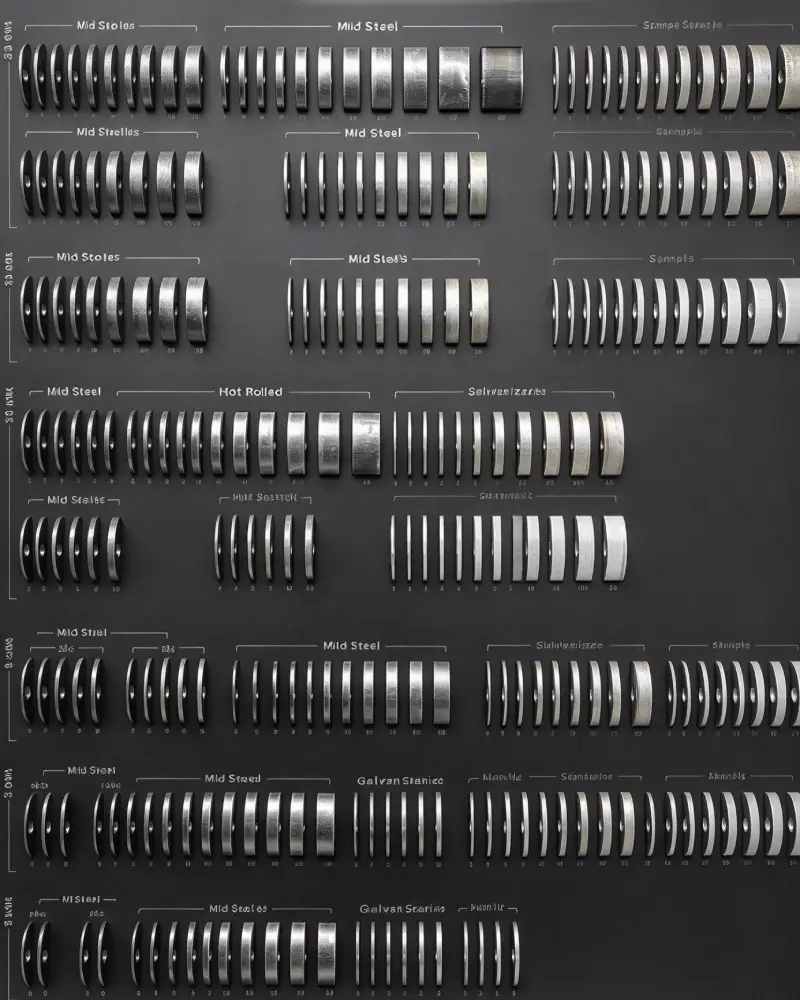
Start with the material, thickness, and overall flat-part dimensions. These establish an initial fit; feature geometry, edge requirements, and downstream work determine the final production route.
The following ranges are preliminary draft values for confirmation, not approved production limits.
| Material | Proposed thickness range | Requirements to review |
|---|---|---|
| Mild and carbon steel | 0.5–20 mm | Grade, stock condition, cut-edge oxidation, and subsequent coating or welding |
| Stainless steel 304 and 316 | 0.5–12 mm | Grade, surface finish, protective film, and acceptable edge discoloration |
| Aluminum 5052 and 6061 | 0.5–8 mm | Alloy, temper, cosmetic surfaces, and any subsequent bending |
Maximum flat-part envelope: up to 3,000 × 1,500 mm , subject to material, thickness, sheet availability, and the clearance needed for cutting and handling.
These ranges describe flat-sheet and plate cutting. Tube and structural-section cutting are outside the standard scope described on this page.
Copper, brass, high-strength steel, and abrasion-resistant steel are reviewed individually rather than treated as standard production materials.
A part can fall within the thickness and size ranges and still require further review. Small holes, narrow webs, dense slots, and close-fit features may need secondary machining or an agreed design adjustment.
Specify the Part You Need to Receive
A cut blank and a finished component are different purchasing scopes. State which operations belong in your quotation.
| Requested scope | What to define in the RFQ | Draft service availability |
|---|---|---|
| Cutting-only blanks | Profile, holes, material, thickness, and acceptable edge condition | Available |
| Deburred or edge-conditioned parts | Burr removal, sharp-edge requirements, and surfaces to protect | Available |
| Bent parts and installed hardware | Finished geometry, bend requirements, hardware specification, and assembly interfaces | Available |
| Machined features | Threads, reamed holes, countersinks, and their acceptance requirements | Available |
| Surface-finished parts | Finish specification, cosmetic surfaces, masking, and dimensional allowances | Project-dependent |
Our quotation identifies the included operations, excluded work, and any externally processed operations. `[To be confirmed]` This provides a consistent basis for comparing prices and defining the delivered part.
For parts that will be formed, include the finished geometry as well as any available flat pattern. Identify whether the flat pattern is mandatory or may be adjusted with your approval.
Identify the Features That Control Fit
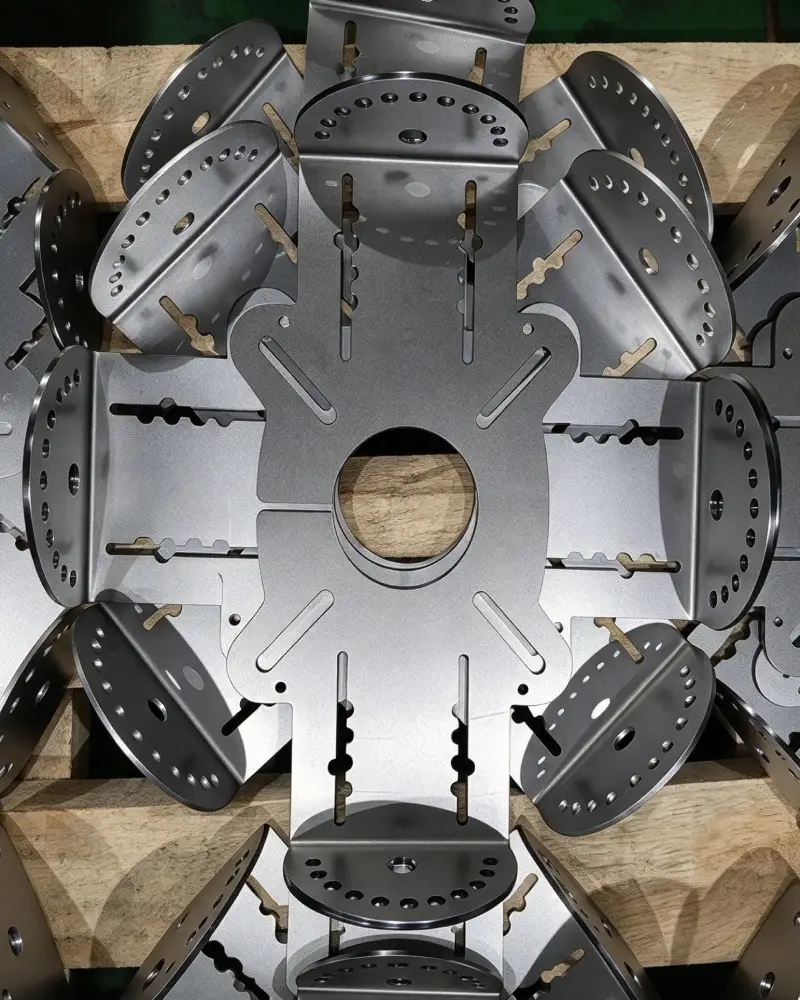
A single tolerance does not describe every requirement on a laser-cut part. Hole diameter, hole position, outside profile, and flatness serve different functions.
Mark the features that locate, fasten, or mate with another component. Include datum references where needed to interpret the drawing, and distinguish critical requirements from general tolerances.
Holes, Slots, and Narrow Webs
Small holes become more difficult to cut cleanly as their diameter decreases relative to material thickness. Dense slots and narrow webs can concentrate heat and increase distortion.
A locating hole may require drilling or reaming when its size, shape, or finish requirements exceed a practical laser-cut result. Explain the feature’s function so the manufacturing route can be reviewed before cutting.
Cut Edges and Thermal Effects
Laser cutting removes a finite kerf and introduces localized heat. Kerf compensation accounts for removed material; piercing, cutting sequence, and heat concentration influence edge condition and distortion.
Oxygen-assisted cutting can leave an oxide layer on carbon steel that may need removal before coating or welding. Nitrogen assist can reduce oxidation, but it does not guarantee a burr-free edge.
Specify the delivered edge condition: as-cut, deburred, edge-broken, or otherwise defined on the drawing.
Features Near Bends
Holes near bend lines, bend reliefs, material orientation, and forming sequence can affect the finished part.
For bent components, identify which document controls the finished geometry. Any change to the flat pattern or manufacturing detail should preserve the intended function and receive approval before production.
Agree on Inspection and Documentation
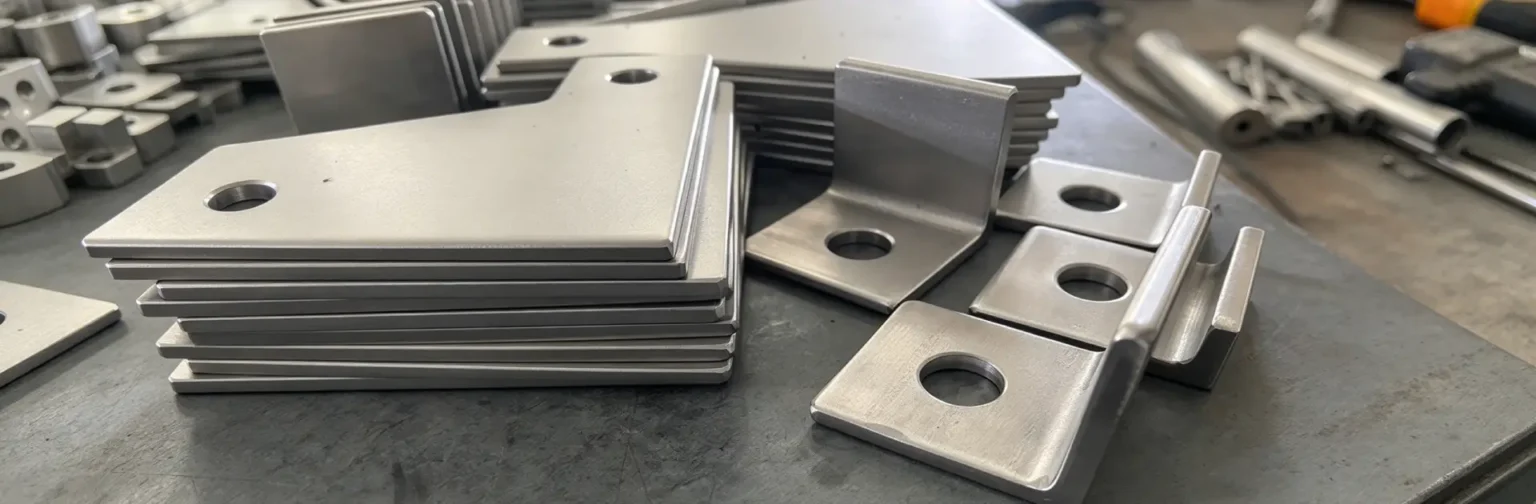
Inspection should follow the features that determine whether the part works. The following inspection options are available subject to the agreed quotation and acceptance requirements.
| Requirement | Proposed check | Acceptance basis |
|---|---|---|
| Outside dimensions and accessible features | Suitable calibrated dimensional tools | Drawing dimensions and agreed tolerances |
| Close-fit hole diameter | Pin gauges or a suitable bore measurement method | Specified hole limits |
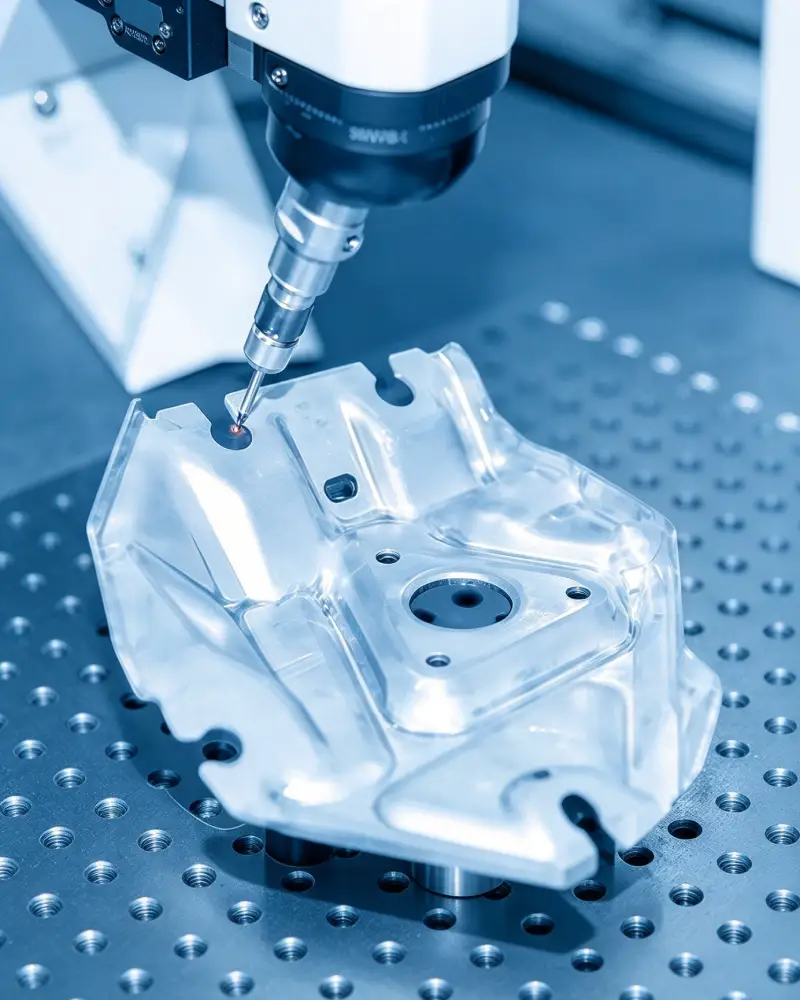
| Hole position and profile relationships | Datum-based coordinate or profile measurement where required | Drawing datums and geometric requirements |
| Flatness | Suitable measurement under an agreed support arrangement | Specified free-state or restrained condition |
| Burrs, edge condition, and appearance | Visual checks against agreed criteria | Defined edge and cosmetic requirements |
A pin gauge can assess hole size; it does not establish hole position. Likewise, a photograph can show surface or edge condition but cannot establish dimensional compliance.
Material records, certificates of conformity, and first-article inspection records can be requested for quotation. `[To be confirmed]` Specify the document type, traceability scope, and report requirements before ordering.
Prototype and Repeat-Order Requirements
Prototype validation
A prototype intended to check an outline may only need a cut blank. A prototype intended to validate assembly may require the final material, bends, hardware, and finish.
Quantity & costing
Include both prototype and anticipated production quantities when requesting a quotation. Setup, nesting, material yield, handling, and secondary operations contribute differently at each volume.
Repeat-order control
For repeat orders, identify the approved drawing revision, acceptance criteria, and any sample approval requirements. State planned releases or recurring demand where known.
Delivery planning
Delivery dates need to account for material availability, cutting complexity, secondary operations, inspection, and packaging. Include the required date and destination in the RFQ rather than assuming that cutting time alone determines the schedule.
Prepare Your Drawing Package
Send available CAD geometry together with a dimensioned PDF drawing.
DXF and DWG commonly describe flat profiles, while STEP communicates three-dimensional geometry. Accepted file formats and software-version compatibility are confirmed during quotation.
For cut-out lettering, enclosed areas need suitable bridges if they must remain attached to the surrounding sheet.
Before submission
- State units and drawing revision.
- Use closed contours for cutting profiles.
- Remove duplicate vectors and overlapping geometry.
- Keep dimensions and construction lines separate from cutting geometry.
- Identify text or markings that must be cut, etched, or omitted.
- Mark critical dimensions, cosmetic surfaces, and features requiring secondary operations.
- Explain any differences between the model, flat pattern, and drawing.
From RFQ to Agreed Production Scope
The proposed quotation process has three stages.
Review the drawing package.
We review the requested material, geometry, critical features, quantities, and delivery requirements.
Clarify manufacturing questions.
We raise unclear requirements and agree on any secondary operations or proposed drawing changes before the affected work begins.
Confirm the order basis.
The quotation and order agreement identify the controlling revision, included work, acceptance requirements, documentation, and delivery schedule.
Any sample approval or first-article requirement should be agreed before production begins.
Frequently Asked Questions
What tolerance can you hold?
The applicable tolerance depends on material, thickness, part size, geometry, and the feature being measured. State critical dimensions separately from general tolerances.
A close-fit hole may require machining after cutting. The quotation should establish the accepted requirements for your part rather than applying one accuracy claim to every feature.
Can you cut copper or brass?
These metals can be laser cut on suitably configured systems, but alloy, thickness, and back-reflection considerations affect feasibility.
ShincoMetal’s acceptance of copper and brass projects is confirmed individually. Send the material specification, thickness, geometry, and required edge condition for review.
Can I request a prototype and production pricing together?
Include both quantities and identify any differences in material, finish, inspection, or delivery scope. Minimum order requirements and scheduling are established for the specific project.
Will stainless steel parts be burr-free?
Not automatically. Gas delivery, focus, nozzle condition, cutting speed, thickness, and geometry affect dross and edge condition.
Nitrogen assist can reduce oxidation, while deburring or other edge conditioning may still be necessary. State the required delivered condition in the RFQ.
Can I request material certificates?
Material documentation can be assessed during quotation. Include the material grade, required document type, and traceability scope.
A material test report and a certificate of conformity serve different purposes. Specify which document your project requires.
What if a delivered part is out of specification?
When reporting a discrepancy, provide the part number, drawing revision, affected quantity, and measurement evidence.
The agreed drawing and acceptance criteria provide the basis for assessment. The order agreement should define the applicable remedy terms.
Request a Quote for Your Laser-Cut Parts
Tell us your material grade, thickness, quantity, finishing needs, and delivery requirements. Include a link to your CAD files and drawings so we can review your project and quote the required scope.
Factory Address
Building 1, No.8, Second Street, Huangjiang Town,
Dongguan City, Guangdong Province
Email
contact@shincometal.com
Phone / WhatsApp
+86 13392819510
Factory Visits
Please contact us in advance to arrange a factory visit.